Enquiry Form
How BI Software Helps Small Businesses Make Data-Driven Decisions
Business Intelligence (BI) software is changing the way small businesses operate in a competitive environment. Small businesses are finding it increasingly difficult to use their gut instinct and guesswork in order to make decisions in today's competitive market. BI software has provided small business owners with the tools necessary to make sound, data-driven decisions. What was once only available for Fortune 500 companies is now accessible to companies of various sizes. With the ability to turn raw data into meaningful and actionable insights to improve their profitability and enhance their level of service.
What is Business Intelligence Software?
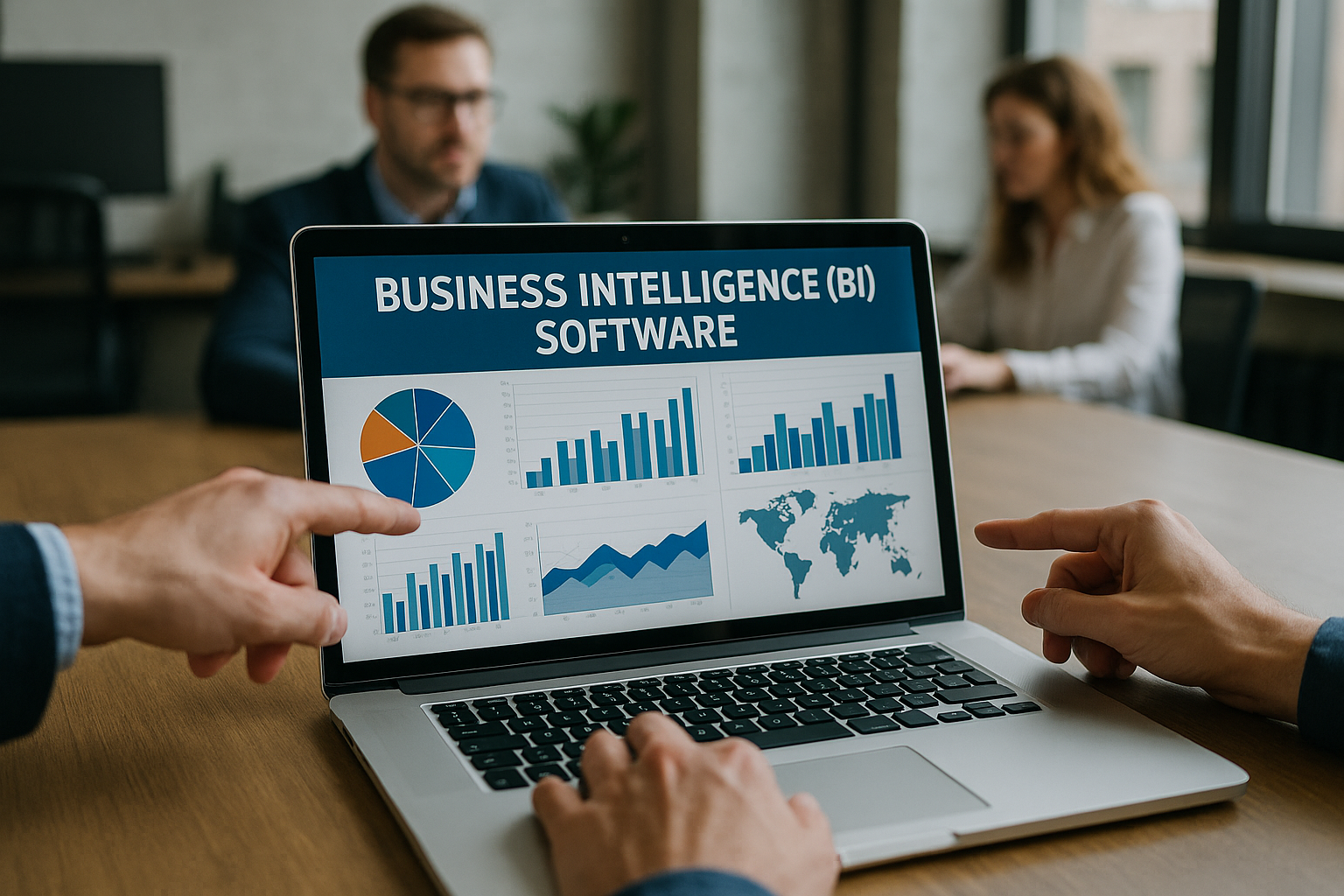
Business Intelligence software is are technology based tool and applications that capture, analyze and display information to provide the user meaningful insight into their business operations. These tools utilize various types of data from multiple sources (Sales, Customer, Inventory and Financial Statements) to develop dashboards, reports and analytical tools that enable Business Owners to understand and respond to their business performance.
Whereas traditional reporting simply provides the end user the data on what has occurred within their business, the use of modern Business Intelligence tools provides the end user with greater understanding of the reasons behind a business event (what happened) and the potential outcomes from that (what may happen next). This capability to provide prediction/value/direction is especially beneficial for small businesses that are limited by financial resources and operating margins.
The Challenges Small Businesses Face Without BI Tools
Data Overload and Fragmentation
Today, many small businesses generate an enormous amount of data from several platforms. Analytics and Business Intelligence (BI) tools allow small businesses to analyze and interpret data collected from these platforms (i.e., POS, e-commerce, social media, email, etc.) to improve their operations; where large companies can afford to hire several data analysts to analyze complex datasets, small businesses usually lack the resources to do so.
Limited Resources for Analysis
Most large organizations have a dedicated team of data analysts. In contrast, most small businesses do not have a dedicated data analyst or the knowledge and experience to analyze large and/or complex datasets on their own. This creates a situation where small business owners or business managers may have many spreadsheets, but may not know how to identify the data in a way that allows them to make informed operational decisions.
Delayed Decision-Making
Because the data used for analysis must be collected and compiled manually, there is often a significant delay in decision-making when an organization has to manually compile and analyze their data. In some industries (e.g., technology), where consumer preferences can quickly change, this delay can mean the difference between being able to take advantage of an up-and-coming trend or totally missing an opportunity.
Key Benefits of BI Software for Small Businesses
Real-Time Visibility into Business Performance
BI software provides business owners with an intuitive dashboard to quickly access crucial business metrics. Through the dashboard, a small business owner can see how his/her sales are doing compared to cash flow, inventory, and customer activity as it happens, allowing the business to react much faster to business conditions than if they were to find out about a problem a week later after it happened.
Improved Financial Management
The financial well-being of the business is critical when you are a small business. Every penny counts, so the better you track your expenses, the more likely you are to identify areas where you can save money, and the better you are able to track your profit margins, forecast future cash flow, and predict where you might have the opportunity to invest your resources.
Enhanced Customer Understanding
Knowing your customers is vital to growing a business. Using BI software, you can use the information gained from analyzing your purchases to determine which customers are providing you with the greatest value, how much they are spending over time, and which of your marketing dollars are returning the best value for your investment.
Data-Driven Inventory Management
For businesses that sell products, BI software allows you to gain control of your inventory levels and also gives you a forecast for when to replenish what items will be in demand. The increased accuracy of your demands allows you to reduce inventory carrying costs, avoid stock outs that cost you revenue, and eliminate overstock situations that consume your working capital.
Essential BI Features for Small Businesses
User-Friendly Dashboards
Small companies would benefit most from user-friendly dashboards (with a smooth learning curve) included with BI software. Graphs, charts, and heat maps help break down large amounts of data for easy access by all employees.
Integration Capabilities
The best BI tools integrate easily with a company's current systems (i.e., accounting, CRM, e-commerce, and/or marketing automation). A well-integrated system of BI tools and current systems reduces manual data entry and ensures the accuracy of the data in BI tools.
Mobile Access
Today it is essential for all business owners to be able to access all of their key metrics on a mobile device from any location at any time. Mobile-friendly business intelligence (BI) systems allow you to access your KPIs to make informed decisions about your company's current state whether you're meeting face-to-face with clients, traveling, or working in your office.
Scalability
As companies' needs change, so do they. Small businesses should look for a BI system that will grow with them and can accommodate their growing volume of data. Advanced analytics systems may enable small-business owners to be able to analyze large amounts of historical data, develop insight(s) about trends in their industry, and make data-driven business decisions based on those trends.
Real-World Applications of BI in Small Business
A real-world application of business intelligence, or BI, in small business is in small retail businesses. They use business intelligence software to optimize the product mix by analyzing sales trends and seasonal patterns. Service-based companies utilize BI tools to determine how profitable each client is and establish a focus on the most profitable accounts. Restaurants use BI to analyze their food waste and price their menu items according to the ingredient costs and how popular that item is. E-commerce businesses have gained the most from the use of business intelligence. They use indicators like their conversion rates from all traffic sources, cart abandonment, and creating product recommendations otherwise. Increased revenue and better customer satisfaction are results of these metrics.
Transform Your Business with Data Intelligence
Business intelligence software will allow small businesses to compete in the same arena as their larger competitors. Using business intelligence tools, you can leverage the information and analytics from your data to help you increase customer satisfaction and create a more efficient, profitable company.
If you're ready to start making decisions based on your data and not on your gut feelings, then contact Softwares in Demand (SID) and let us match you with the best business intelligence software for your small business. We'll identify and implement business intelligence tools that align with your goals and budget, giving you the ability to use your data as your differentiator.