Enquiry Form
What Is a LIMS A Beginner's Guide to Laboratory Information Management Systems
Laboratories from all sectors are dealing with the increasing demand for data efficiency, regulatory compliance, and timely and accurate data, as the world becomes more data-based. The Laboratory Information Management System (LIMS) is a robust software application changing how laboratories in the modern era function. All laboratories will need to understand LIMS technology to be competitive in 2025, be it a clinical diagnostics laboratory in the healthcare field, a pharmaceutical research laboratory, a food chemistry lab, or an environmental testing laboratory.
Understanding LIMS: The Basics
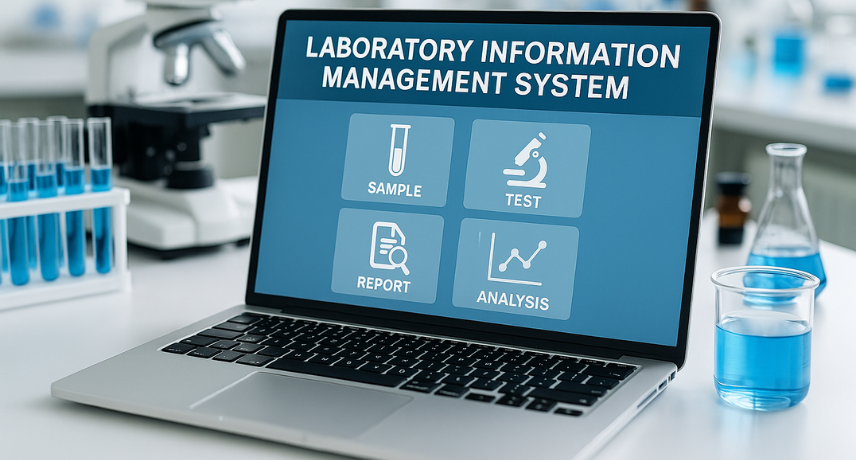
A Laboratory Information Management System (LIMS) is a unique type of software used to manage, track, and facilitate laboratory functions. It can be thought of as the "central nervous system" of your lab, coordinating everything from intake and tracking samples to data management, workflow automation, and regulatory compliance reporting.
A LIMS takes the paper-based processes that slow down laboratory work and digitizes and automates those processes. It eliminates the need to (manually) log samples in notebooks or spreadsheets across several different systems and fulfills a Utopian state of a digital universe that allows the flow of laboratory data to live in one place.
Key Features That Make LIMS Essential
LIMS platforms today come with a suite of powerful features created specifically for the complexities of current laboratories:
Sample Management and Tracking: The LIMS assigns a unique identifier to each sample and monitors that identifier from the time of sample collection until the conclusion of the study period. Barcode integration and RFID technology allow up-to-the-minute sample locations to reduce lost samples and human error.
Workflow Automation: The LIMS automates various repetitive tasks and standardizes laboratory protocols, reducing manual checking in the workflow. This includes automatically assigning tests to samples, calculating results, and generating reports, saving scientists valuable time for analysis rather than administrative tasks.
Data Management and Integration: As a repository for any laboratory data in one central location, LIMS is integrated with various analytical instruments, electronic lab notebooks (ELNs), and enterprise resource planning (ERP) software applications for fewer human barriers and data silos between instruments and applications.
Quality Control & Compliance: Internal quality control checks, audit trails, and compliance reporting features built into the LIMS assist laboratories in meeting rigorous agency regulations or expected well-defined standards from the FDA, EPA, and ISO requirements. All actions are time-stamped to user identification when logged for an audit trail of all unalterable records.
Industries Benefiting from LIMS Technology
The flexibility of LIMS makes it crucial in a variety of sectors:
Healthcare and Clinical Diagnostics: Hospitals and diagnostic laboratories use LIMS for the management of patient samples, assurance of accurate test results, and retention of compliance with HIPAA, which codifies sensitive medical data.
Pharmaceutical and Biotechnology: The appropriate documentation and traceability required in drug development require extreme detail. LIMS provides support from early-stage research to clinical trials and then through to manufacturing quality control.
Environmental Testing: Laboratories analyzing water, soil, and air samples heavily rely on LIMS to organize and manage processing high sample workloads, and plans were required for the chain of custody and regulatory reporting for environmental agencies.
Food and Beverage: Factors and quality control labs conducting testing for food safety and toxicity, while verifying nutritional fact reporting needs LIMS for compliance.
Manufacturing and Industrial: Whether petrochemical or cosmetic, manufacturing labs rely on LIMS for quality assurance testing while inquiring about raw material and the finished products for certification.
The Business Case: Why Invest in LIMS?
Implementing a LIMS requires a substantial upfront expense, but the benefits make it worthwhile. Organizations have experienced reductions in turnaround time for testing results of 30-50%, which directly impacts customer experience and revenue generation. Reduced manual data entry results in errors that improve by up to 40%, reducing costs associated with retests and fines for non-compliance.
A lot of labor efficiency is gained when the tedious administrative task that once took hours can now be completed in minutes, allowing the laboratory to take in more samples without adding an equivalent number of lab staff. Many organizations can achieve ROI within 18-24 months from improved throughput, reduced errors, and improved labor utilization.
Finally, LIMS provides the scalability that is required for modern labs. When test volumes go up, LIMS handles the needs of the lab without an increase in staff or additional infrastructure.
Choosing the Right LIMS: Key Considerations
LIMS solutions are not one-size-fits-all. When you're evaluating options, factor in the following important considerations:
Deployment Model: Cloud-based LIMS requires less initial investment, works with automatic updates, and is accessible remotely. On-premise models will require more input cost but give you more control over data security and customization.
Industry-Specific Functionality: "Generic" LIMS do not usually have the workflows or compliance tools your specific industry may need. You will want to look for solutions that have a proven history of servicing your industry.
Integration capabilities: The LIMS that you choose must be able to integrate seamlessly with the other laboratory instruments already in place, as well as ERP systems and any other software tools. If integration fails to the point where you have silos of data and are not efficient, implementation of the LIMS will not be successful.
Vendor Support and Training: Most successful implementations are reliant on the level of training, expertise, and continued support provided by the vendor. Assess any potential vendors based on their level of training, their implementation methodology, and their success with other customers.
Scalability and Future-Proofing: Your laboratory does not stay the same, and neither will your selections for LIMS. Select a LIMS that can grow with you by supporting testing methods, locations, and technologies such as artificial intelligence and machine learning.
The Future of Laboratory Management
As we approach 2025, LIMS technology continues to change. Artificial intelligence opens up possibilities for predictive maintenance, automated validation of results, and intelligent sample routing. Cloud computing promotes the availability of more sophisticated LIMS capabilities to labs of all sizes, providing access to technology that only large corporations formerly had.
For labs that aspire to remain competitive, the question has flipped from "if" to "when, and which LIMS?" By connecting data, automating processes, and controlling compliance, LIMS helps labs go from compliance centers to positions of value and contribution for research and business development.
Whether you are an organization looking at LIMS for the first time or you are committed to upgrading your LIMS investment, you will want to understand these ideas to be informed to make choices that will allow your lab to thrive for years into the future.